
Blog

Contact Us
At Credit Care of DMV, we don’t just repair, but also educate people about credit so that they never find themselves in that same situation in life.
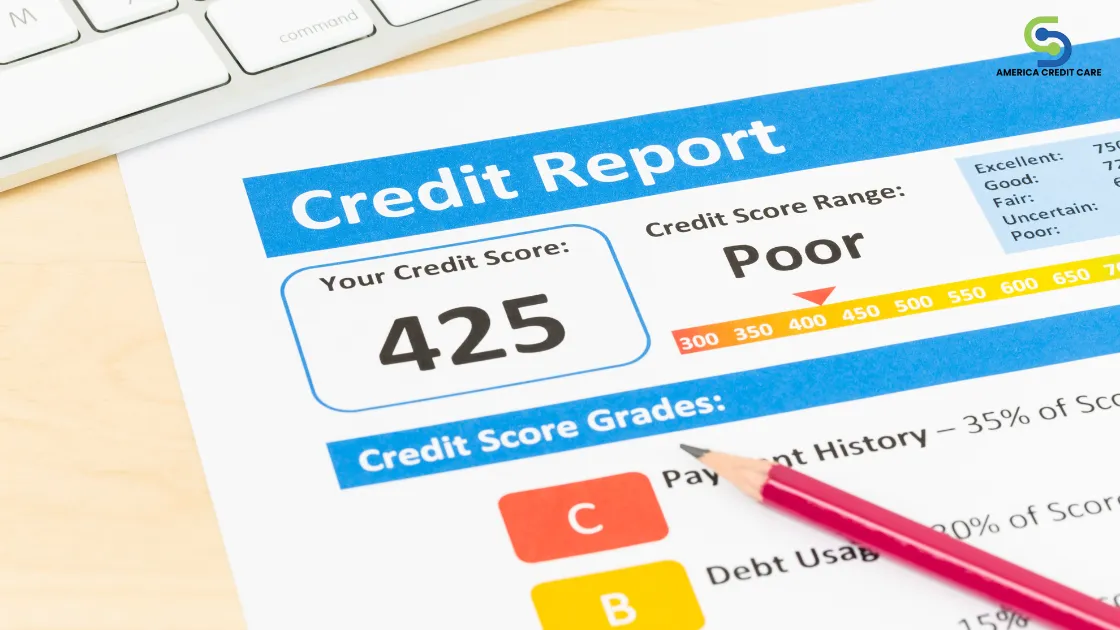
How Credit Bureaus REALLY Investigate Disputes (ACDV vs AUD Explained)
Have you ever disputed a late payment on your credit report, waited 30 days, and received a simple “verified as accurate” response despite having proof of the error?
For most consumers, the process of fixing an error on a credit report feels like shouting into a void.
Yes, it can be frustrating when you feel outmaneuvered by the system.
However, what you don’t see is the real action happening behind the scenes: an electronic form called an ACDV zipping through a system named e-OSCAR to your creditor, who checks a box and sends it back.
There is no manual deep dive into your bank statements. No call to ask what went wrong. Just a code.
This isn’t a glitch.
It’s how the $16 trillion U.S. credit reporting system works.
Why Dispute Mechanics Matter
Credit report errors are NOT rare edge cases.
According to an FTC study, nearly one in five Americans has an error on their credit report serious enough to hike loan rates or block approvals. Yet many credit disputes fizzle because consumers don’t grasp how credit bureaus really investigate disputes.
Four out of five consumers who filed disputes in that study saw some modification to their reports, which means the dispute process often works, if you use it correctly.
More recent data show the problem has grown, not shrunk. Credit report complaints to the Consumer Financial Protection Bureau (CFPB) roughly doubled between 2021 and 2023, from about 307,000 to more than 640,000, and now make up almost half of all complaints the Bureau receives.
The most common issues are incorrect information, improper use of credit reports, and problems with how credit bureaus investigate complaints.
CFPB analysis shows that roughly 30.8 percent of credit‑reporting complaints involve incorrect information, and 21.9 percent involve problems with the bureau’s investigation itself.
In other words, a large share of consumers feel their disputes were mishandled or not properly investigated, which often looks like a rejection from the consumer side.
The hidden layer: e‑OSCAR and Metro 2
When you mail a dispute letter to Equifax, Experian, or TransUnion to get rid of a derogatory item like late or missing payment, charge-off, collection, etc., it doesn't land on a desk for manual investigation.
Instead, it enters e-OSCAR (Electronic Online Solution for Complete and Accurate Reporting).
This is a web-based system owned and operated by the bureaus. It standardizes how credit disputes are handled in the United States.
Every detailed letter you write is condensed into a two or three-digit code (like "001: Not mine").
This data is transmitted in Metro 2 format i.e. the industry-standard language for credit reporting. It is the standard data format the industry uses to describe accounts—balances, due dates, status codes, and special remarks.
So when you or a credit repair specialist disputes a credit report on your behalf, the resulting “investigation" is essentially a digital handshake between e-OSCAR and your creditor.
Metro 2 is the language and e‑OSCAR is the messenger.
This brings us to the two most important acronyms in credit restoration: ACDV and AUD.
What is ACDV
ACDV stands for Automated Credit Dispute Verification. It is the electronic form the bureau sends to the data furnisher when you file an indirect dispute i.e. you submit the dispute to the bureau, not directly to the creditor.
An ACDV includes:
Your basic identity data and the specific account in question.
One or more dispute codes (e.g., “not mine,” “paid but showing past due,” “wrong dates,” etc.).
A short narrative and, today, scanned copies of any documents you provide at the time of filing the dispute.
Next, the furnisher investigates the claims made in the dispute and responds through e‑OSCAR, usually by either:
Verifying the account as reported.
Modifying fields like balance, dates, or status.
Asking the bureau to delete the tradeline.
Those responses are sent back using Metro 2 data elements, which the bureau uses to update your file. To you or the credit restoration service handling your disputes, it shows up as a dispute notation, then as a change (or no change) to the tradeline.
Since this process is automated, nuanced evidence often gets ignored.
So, even if the creditor’s records are wrong, they might simply "verify" their own mistake.
Book a FREE Personal Credit Consultation Today!
What is AUD
AUD stands for Automated Universal Dataform. In some cases, this is the tool of choice for savvy consumers who opt for DIY credit repair and even professional credit restoration specialists, because it is "direct."
Unlike an ACDV, an AUD is initiated by the creditor, not the bureau. If you contact a bank directly and prove an error, they use an AUD to "push" a correction to all bureaus simultaneously.
From the credit reporting agency’s (CRA) perspective, the AUD tells it to treat the new data as a correction to an existing tradeline, not as a fresh account. e‑OSCAR routes that update to each bureau where the furnisher reports, so the same fix can hit Equifax, Experian, and TransUnion together if the furnisher chooses.
Companies use AUDs when:
They find an internal reporting error and need an out‑of‑cycle fix; they bypass the bureau’s coding clerks and force an immediate change or deletion across the board.
They resolve a direct dispute from you and agree a correction is needed.
They honor a settlement or other agreement that requires a status change or deletion.
The AUD carries new Metro 2 values, such as a corrected first, delinquency date, an updated balance, a status change, or an instruction to delete the tradeline, and e‑OSCAR forwards those to each bureau where the furnisher reports.
AUD: How the change appears on your credit file
Once applied, the AUD’s effect is indistinguishable from any other valid update the furnisher sends:
Field corrections: Updated Metro 2 fields, such as balance, account status, date of first delinquency, or remarks, simply overwrite the old values on the tradeline. On your consumer disclosure, you will see the corrected numbers or dates and not an AUD label.
Deletions: If the AUD instructs the CRA to delete a tradeline, that account disappears from your file entirely, as if it had been removed after a dispute. If a tradeline is deleted by ACDV or AUD in error, it has to be reinstated through a special reinsertion process; it cannot be “undeleted” via another AUD.
Timing and out‑of‑cycle behavior: AUDs are “out‑of‑cycle.’ So, they can change your file between regular monthly updates, which is why you may see a late mark corrected or a collection deleted mid‑month after a furnisher resolves an issue. The CRA treats the AUD as a one‑time correction and then goes back to using the furnisher’s regular Metro 2 tapes for ongoing updates.
AUD: What you see vs. what you never see
On consumer’s side, the visible signs of an AUD are:
A tradeline that suddenly shows a different status (for example, “pays as agreed” instead of “30 days late”), a corrected DOFD, or a new remark (such as “dispute resolved – consumer disagrees”).
A tradeline that vanishes from all three bureaus after a correction or deletion instruction.
You never see:
The term “AUD” in your report.
The internal e‑OSCAR record or the fact that the furnisher chose an out‑of‑cycle update vs. a normal monthly file.
In short, an AUD update works behind the scenes.
On your consumer file, it shows up only as a faster‑than‑usual correction, status change, or deletion of an existing tradeline, applied directly by the CRA using the new data the furnisher sent.
How ACDV and AUD connect to Metro 2
Behind the scenes, ACDV responses and AUD updates represent compact Metro 2 “mini‑files” when you file a credit dispute.
For example:
If a late payment was mis-reported by a lender i.e. the furnisher, they can send an ACDV response or AUD that changes the Metro 2 Account Status and Payment Rating codes for that month.
If the Date of First Delinquency was reported incorrectly in your report, they may update that date field through ACDV or AUD, and the bureau uses it to recalculate how long the negative item can stay.
If an account should not be on your file at all, they can send a delete instruction, which removes the tradeline from the consumer‑visible report.
Experienced credit repair specialists know that every serious correction you win, happens because someone on the other end changed the Metro 2 data through an ACDV response or an AUD.
Why this matters when you need to improve your score
Understanding terms like ACTV, AUD, e-OSCAR, and Metro 2 changes how you file disputes and improve your odds of success.
First, these terms help you understand why specific, documented disputes work better. Regulators stress that bureaus and furnishers must receive “all relevant information” you provide and must investigate it. In practice, that means the more clearly your claim and proof can be translated into a precise ACDV code and supporting documents, the harder it is for a furnisher to simply click “verified.”
Second, these terms help you understand why sometimes you want to talk to the furnisher as well as the bureau. If a creditor admits an error to you, say, a late fee that should not apply, you can ask them to correct reports via their own systems. This often means sending an AUD to all three bureaus. That can be faster and cleaner than multiple rounds of indirect disputes.
Third, understanding how the dispute process really works will help you recognize when the process breaks down. The CFPB has in the past warned that companies that fail to reasonably investigate disputes, or that reinstate deleted data without proper notice, can face enforcement under the Fair Credit Reporting Act (FCRA).
Therefore, when you see “verified” outcomes that ignore clear evidence, consider it a sign to escalate the matter to a regulator, to counsel, or to a reputed credit restoration service like AMERICA CREDIT CARE.
Book a FREE Personal Credit Consultation Today!
How legitimate credit restoration services can help
Legitimate credit repair companies do not have special access to the bureaus, and they cannot legally remove accurate negative information.
Anything credit repair specialists do has to flow through the same e‑OSCAR and Metro 2 framework.
Their real edge is knowing how disputes are coded, how furnishers read ACDVs, and how to push for an AUD‑level fix when a creditor admits an error.
An experienced firm can:
Audit reports from all three bureaus to find real inaccuracies and compliance issues instead of trying to dispute anything or everything.
Draft tight, evidence‑driven disputes that map cleanly to ACDV codes and give furnishers a valid reason to correct or delete.
Coordinate with creditors and collectors when appropriate to secure written corrections or deletions and prompt AUD updates across all bureaus.
Track timelines, escalation paths (including CFPB complaints), and follow‑up rounds so that inaccurate derogatory items and credit report errors are pursued until they are fixed or clearly closed.
For consumers juggling work, family, and complex credit histories, such process discipline often means faster, cleaner outcomes and fewer dead‑end “verified” letters.
When you are heading into a high‑stakes moment, like a mortgage or auto purchase, the combination of accurate reports and better loan terms can make professional help pay for itself through lower interest rates.
No, understanding ACDV and AUD will not turn you into a bureau insider overnight, but it does change how you approach disputes.
You stop firing off generic complaints and start building targeted, documented cases that fit the way investigations really work, whether you handle them yourself or with a trusted credit restoration service like AMERICA CREDIT CARE.
For example, several people keep submitting ACDVs (disputing with bureaus) and getting the same "Verified" result. When you have ironclad proof, a credit repair specialist will recommend that your goal should be to trigger an AUD.
They do this by sending a "Direct Dispute" to the creditor’s compliance department. When they prove the error to the source, information furnishers are legally obligated under the FCRA to update the record via an AUD.
Seasoned professionals also look for Metro 2 non-compliance.
For example, if a creditor reports a "Date of Last Activity" on Equifax that differs from TransUnion, it is a Metro 2 violation.
A credit repair specialist identifies such technical mistakes that the e-OSCAR system is designed to flag.
Often, professionals can force a deletion where a standard "this isn't mine" letter would fail by disputing the integrity of the data format itself.

LET'S TALK
Get in Touch.
Thank you for your interest in Credit Care of DMV. Please use the contact form to tell us about your inquiry and/or needs. We look forward to partnering with you.

Office
NMLS ID 2423540
16701 Melford Blvd
Ste 400
Bowie, MD 20715

Email Us

Phone Support
+1 (240)-347-5995- Calls
+1 (240) 376-2552 - Text
GET IN CONNECTED
Follow Our Social Media


Need help?
Don't hesitate to contact us.
Copyright ©2026 America Credit Care. All rights reserved. Powered by WebbArtt Solutions
Legal Notice
NMLS # 2423540
Term of Use
Privacy Policy
Cookie Policy
We have many years of experience in evaluating credit and guiding consumers to assert their legal rights. We do it every day! We guarantee honesty and dependability, virtues which most people seem to have forgotten.




Copyright © 2026 America Credit Care. All rights reserved. Powered by WebbArtt Solutions