
Blog

Contact Us
At Credit Care of DMV, we don’t just repair, but also educate people about credit so that they never find themselves in that same situation in life.
Late Payments: Why They Hurt, and When They Can Be Challenged
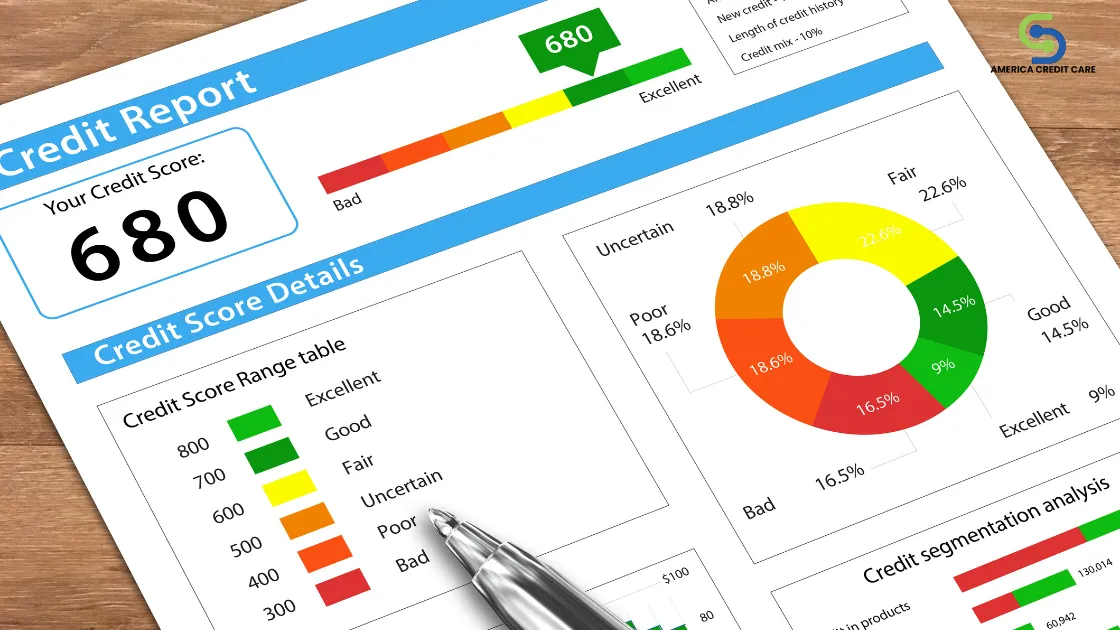
Late payments on your credit report can tank your credit score and limit your financial options. But while the impact is undeniable, it isn’t always permanent, and it isn’t always due to accurately reported derogatory items. Yes, in many cases, late payment marks can be challenged and removed, if inaccurate.
Here in this post, we will understand why late payments hurt your credit score, when to fight back to remove erroneous late payments from your credit reports, and how to bounce back stronger with a good credit score.
Why late payments hurt your score
One late payment 30 days past due, can drop your score by 100 points or more, depending on your starting point and history. Payment history drives 35% of FICO scores and 40-41% of VantageScore 3.0/4.0, making on-time payments your biggest lever for a strong credit profile.
Three major credit bureaus i.e. Equifax, Experian, and TransUnion, typically don’t hear anything from your lenders until you are a full 30 days past the due date. While your bank might charge you a late fee the day after a missed deadline, that derogatory mark won't hit your credit report until that 30-day window closes.
Once it does, the damage scales based on the severity and the scoring model:
Late payments in FICO 8 and 9: These are the "standard" models used by most lenders. They categorize lates in 30-day increments (30, 60, 90, and 120+ days). A 90-day delinquency is significantly more damaging than a 30-day one, as it signals a higher risk of total default. FICO Score 8, widely used today, penalizes late payments heavily in payment history, with effects fading over time but lingering up to seven years.
Late payments in FICO 10: The newer FICO Score 10 amps up the punishment for recent lates, hitting scores harder than prior versions to better predict defaults. FICO 10T (Trended) looks at the direction of your balances over 24-30 months. A late payment followed by rising balances is penalized much more heavily than a late payment followed by aggressive debt pay-down.
VantageScore® 3.0 and 4.0: These models also heavily weigh payment history. VantageScore 4.0 weights payment history at 41%. Multiple or recent ‘lates’ drag scores most severely, though older ones lose punch because VantageScore 4.0 looks at "trended data." It doesn't just see a late payment; it looks at whether your overall payment behavior is improving or deteriorating over time.
According to the Fair Credit Reporting Act (FCRA), these marks can legally stay on your report for seven years from the original date of delinquency.
Their impact "fades" as they age. A five-year-old late payment carries much less weight than one from last month.
Book Your FREE Personal Credit Consultation Today!
How long do different late payment statuses stay on reports
Reporting thresholds : Bureaus don't note payments until 30 days past due. A single slip-up at this stage stays visible for seven years.
60-day and 90-day lates: If you miss again, expect 60-day or 90-day labels; these also linger seven years from the first missed payment in the sequence. Multiple lates compound the damage, but the timeline ties back to that initial delinquency.
Severe delinquencies (120+ days): Beyond 90 days, accounts may show as 120+ days late, charge-offs, or collections referrals, still seven years total from the original delinquency date. If an account had late payments and was then paid and closed, the entire tradeline (including the positive history) usually drops off 7 years from the Date of First Delinquency (DOFD). Only accounts that were always current (never late) are guaranteed to stay for 10 years after closing. If there's a late mark, the bureaus typically purge the whole record at the 7-year mark to ensure the negative data is gone.
Common reporting errors in late payment marks in credit reports
You might assume that because a late payment is on your report, it must be true. In reality, the Consumer Financial Protection Bureau (CFPB) has noted that credit reporting complaints are the most common issue they handle.
You can make an effort to remove inaccurate late payments from your credit report only after having understood how to spot these errors. You have to look under the hood at the Metro 2 format. This is the industry format used by all three major credit bureaus to ensure data is "accurate, complete, and updated."
Common errors in late payment marks often stem from furnishers (like banks) or bureaus mishandling data under Metro 2 standards. When a lender reports a late payment, they must follow a strict coding manual. If they deviate from these rules, they are in violation of the Fair Credit Reporting Act (FCRA) because the data is technically "unverifiable."
These violations of the Metro 2 format specifications (updated via e-OSCAR guidelines) trigger FCRA disputes, as furnishers must report accurately or face deletion.
Here are the most common technical errors that qualify as Metro 2 violations and the specific codes you should look for.
Incorrect Date of First Delinquency (DOFD): The DOFD is the anchor for the seven-year reporting window. Lenders often "re-age" accounts by updating this date to a more recent one (e.g., shifting a 30-day late to 90 days), keeping a late payment on your report longer than legally allowed. Under Metro 2, the DOFD field must remain static. It is the date of the very first missed payment in the series that led to the current status. If this field changes after the account is brought current or sold, it is a reporting violation. You or a legitimate credit repair company can dispute it as mismatched payment history.
Inconsistent "Account Status" Codes: An account is marked as "30 days late", but the payment history profile shows the account was "Current" during that same month. This is a logic error within the Base Segment. The Account Status field must match the Payment History Profile field character for character. If the status says "90 days late" but the history grid shows "30," the data is contradictory and must be deleted or corrected.
Invalid "Date of Last Activity" (DLA) Updates: Some lenders update the DLA every month, even if no payment was made or no action was taken on the account. The DLA field should only reflect the last time a payment was made or a significant change occurred. Constant "rolling" of this date is often an attempt to keep a negative mark "fresh" in scoring models, which violates the requirement for accurate chronological reporting.
The "Payment Rating" vs. "Current Status" Conflict: The account is listed as "Current" in the header, but the Payment Rating is coded as "3" (90 days past due). Metro 2 requires internal consistency. Payment Rating Field is used to identify the delinquency level of a past-due account. If the account is settled or current, this field must be coded as 0 (Current) or G (Collection). A mismatch here creates a "dead end" in the scoring algorithm, often resulting in an artificially lower score.
Missing "Original Loan Amount" on Charged-Off Accounts: Once a late payment progresses to a "Charge-Off," lenders often stop reporting the original loan amount or the high credit limit. For a late payment history to be complete, the High Credit/Loan Amount field must be populated. Leaving this blank while reporting a late balance prevents the scoring model from accurately calculating your "utilization" or "debt-to-limit" ratio.
Duplicate Reporting: Same late payment mark is listed twice with varying codes; this error violates Metro 2 uniqueness in Account Number field.
Identity Mix-ups: Information from a person with a similar name or Social Security number is "merged" into your file.
Fraudulent Accounts: Late payments appearing on accounts you never opened (a clear sign of identity theft).
When you identify these specific coding errors, your dispute shouldn't just say, "This isn't mine." It should cite specific violations to increase the odds of successful removal of late payment marks.
Book Your FREE Personal Credit Consultation Today!
A seasoned credit repair specialist can help you identify these errors on your report. They can cite specific Metro 2 violations in disputes filed on your behalf and bureaus must verify or scrub incorrect late payment marks. According to the FTC, over 20% of credit reports have such fixable errors.
How to challenge inaccurate late payments
If you spot an error related to a late payment mark on your credit report, you have the right to dispute it under the FCRA.
Collect bank statements, payment confirmations, creditor letters, or emails proving the payment was on time. Note the exact account, date, and late mark details—this strengthens your case under FCRA, where bureaus must verify or delete.
Don't just notify the credit bureau. Write a formal dispute letter to both the credit bureau (to have it removed from the report) and the data furnisher (the bank that reported it).
Always send your disputes via certified mail with a return receipt. This starts a legal 30-day clock (sometimes 45 days if you use a free annual report) for them to investigate. If they cannot verify the accuracy of the mark within that window, they must remove it.
Successful removal of inaccurate late payment marks hinges on solid proof. So, be sure to gather enough evidence, cite exact violations in your dispute letters, and follow up with the bureaus and furnishers.
Late payment removal by professionals vs. DIY credit repair
Why do people hire reputed credit repair companies like AMERICA CREDIT CARE me instead of doing it themselves? It comes down to leverage and persistence.
A DIY credit dispute often ends with a generic "Information Verified" response from the bureau.
A reputed personal credit repair service provider understands the nuances of the law. They demand that the furnisher provide the underlying documentation i.e. the original contracts or digital audit logs to prove they have the right to report that specific data. If they can't produce the proof, the mark must go.
Professional credit restoration services are often more effective at using the "e-OSCAR" system (the automated network bureaus use to process disputes) to your advantage; they can also identify secondary violations that a layperson might miss.
Book Your FREE Personal Credit Consultation Today!
Can you remove an accurate late payment?
If the late payment is legitimate, the bureaus are not legally required to remove it. However, you aren't out of options.
For example, if you have been a loyal customer for years and had a one-time slip-up (due to a medical emergency or a move), you can send a "Goodwill Letter." You are essentially asking the creditor for a "pardon." While they aren't obligated to say yes, many lenders will delete a 30-day late mark as a courtesy to keep a good customer.
Also, if the late payment mark on your credit report happens to be the result of identity theft, you have enhanced protections. You can file an Identity Theft Report through IdentityTheft.gov to "block" that information from appearing on your report within four business days of the bureaus receiving your request. This is a specific requirement under FCRA Section 605B.
How to avoid late payment marks
The best way to handle late payments is to never have them.
Set your "autopay" for the minimum amount due at least 24 hours before the deadline. Even if you forget to pay the full balance, the "minimum" keeps your credit score safe.
If you get paid on the 15th, move your due dates to the 20th. Most creditors allow you to change your billing cycle once a year.
If you are in the middle of a mortgage application and just realized a late payment hit your report, ask your lender about a "Rapid Rescore." This is an expedited process where the bureaus can update your score in 3-5 business days once you provide proof the error has been corrected.
You can also build a safety net. Three-to-six months' worth of expenses can prevent hardships and preempt late payment marks that hurt your credit score and make various financial products like car loans, mortgages, and even credit cards more expensive.
Tips to rebuild credit after a late payment
One late payment fades with consistent good habits. You can expect noticeable score gains in about three to six months. Focus on payment history and utilization to outpace the damage.
Pay everything on time: Set up autopay for minimums and reminders for full balances; payment history is 35% of FICO scores. Make a promise to yourself that you will never miss a payment again; this builds positive history that dilutes the late mark.
Slash credit utilization: Pay down balances to under 30% of limits. Request limit increases on good-standing cards to lower ratios without spending more.
Dispute errors first: Scan reports and challenge inaccuracies like misreported lates. Hire a credit repair company if you don’t have the skills or bandwidth for DIY credit repair. Successful removal of late payment marks can lead to immediate score boost.
Try goodwill requests: After 6 months of perfect payments, you can send polite letters to creditors asking to remove the late as a one-time courtesy. Success varies but this strategy might work if you had a solid prior history. A credit repair specialist can also negotiate goodwill settlements on your behalf.
Add positive accounts: Get a secured card or credit-builder loan; use lightly and pay off monthly for mix and history gains. Avoid new hard inquiries until your credit profile is stable.
Monitor progress: Track your credit score at routine intervals and analyze your reports for potential errors.
Book Your FREE Personal Credit Consultation Today!

LET'S TALK
Get in Touch.
Thank you for your interest in Credit Care of DMV. Please use the contact form to tell us about your inquiry and/or needs. We look forward to partnering with you.

Office
NMLS ID 2423540
16701 Melford Blvd
Ste 400
Bowie, MD 20715

Email Us

Phone Support
+1 (240)-347-5995- Calls
+1 (240) 376-2552 - Text

GET IN CONNECTED
Follow Our Social Media


Need help?
Don't hesitate to contact us.
Copyright ©2026 America Credit Care. All rights reserved. Powered by WebbArtt Solutions
Legal Notice
NMLS # 2423540
Term of Use
Privacy Policy
Cookie Policy
We have many years of experience in evaluating credit and guiding consumers to assert their legal rights. We do it every day! We guarantee honesty and dependability, virtues which most people seem to have forgotten.




Copyright © 2026 America Credit Care. All rights reserved. Powered by WebbArtt Solutions